Industrial Shafts Description
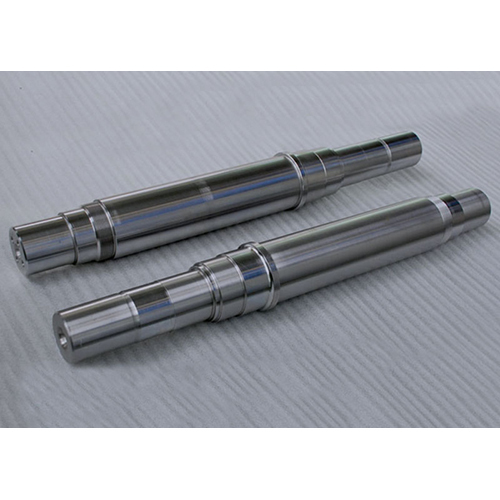
Industrial Shafts are precision-engineered mechanical components designed to transmit torque, rotational motion, and power between various machine elements. Manufactured from high-strength alloy steel, carbon steel, stainless steel, or other specialized materials, industrial shafts are produced using advanced machining, grinding, and heat treatment processes to ensure exceptional strength, dimensional accuracy, and durability. These shafts play a vital role in a wide range of industrial machinery, providing reliable performance under heavy loads and demanding operating conditions.
Key Features
- High strength and load-bearing capacity.
- Precision-machined for accurate dimensions and balance.
- Excellent wear, fatigue, and impact resistance.
- Heat-treated for enhanced hardness and durability.
- Smooth surface finish with tight tolerances.
- Suitable for high-speed and heavy-duty applications.
- Available in custom sizes and specifications.
Materials Used
Common materials include:
- Alloy Steel
- Carbon Steel
- Stainless Steel
- EN8 Steel
- EN19 Steel
- EN24 Steel
- SAE 4140
- SAE 4340
Applications
- Industrial machinery
- Gearboxes and transmission systems
- Pumps and compressors
- Electric motors and generators
- Textile machinery
- Construction and mining equipment
- Material handling systems
- Automotive and heavy engineering industries
Advantages
- Efficient transmission of power and torque.
- High durability and long service life.
- Excellent resistance to wear and heavy loads.
- Reliable performance in demanding environments.
- Reduced maintenance and downtime.
- Customizable to meet specific industrial requirements.
Summary:
Industrial Shafts are high-performance rotating components designed for efficient power transmission in a wide variety of machinery and equipment. Their precision engineering, strength, durability, and reliability make them essential for automotive, manufacturing, mining, construction, power generation, and other industrial applications.

 Send Inquiry



 Send Inquiry

 Send Inquiry